Select Two Metrics to Compare
Choose up to two metrics to display with separate scales
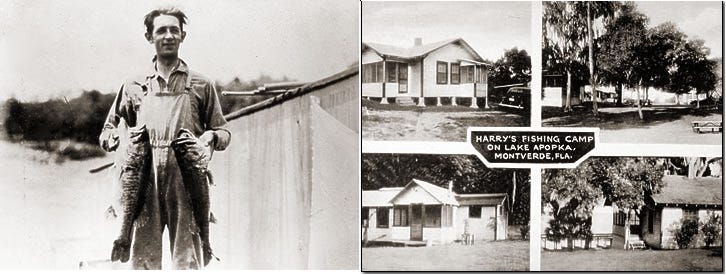
Pre-1940s: Pristine Waters and a Bass Fishing Paradise
In the early 20th century, Lake Apopka was renowned as one of Florida's premier bass fishing destinations. The lake's waters were clear with abundant aquatic vegetation providing ideal habitat for fish and wildlife. Anglers traveled from around the United States to fish for trophy-sized largemouth bass, and more than 20 fish camps dotted the shoreline.
Human modifications began in the late 1800s with the Apopka-Beauclair Canal, completed in 1893, which lowered the lake level by roughly 1 meter. Despite these changes, Lake Apopka's waters remained clear and vegetated through the 1930s.
1940s-1970s: Agricultural Pollution and Ecological Collapse
The 1940s marked a turning point for Lake Apopka when approximately 20,000 acres of the north shore were drained and converted into vegetable farms. By 1942, pump stations were discharging nutrient-rich farm runoff directly into the lake, along with municipal sewage and citrus processing wastes.
A hurricane in 1947 destroyed large areas of submerged vegetation, and combined with elevated nutrients, triggered a shift from a clear, plant-dominated lake to an algae-dominated state. Game fish populations plummeted, and by the 1970s, Lake Apopka was regularly cited as Florida's most polluted large lake.
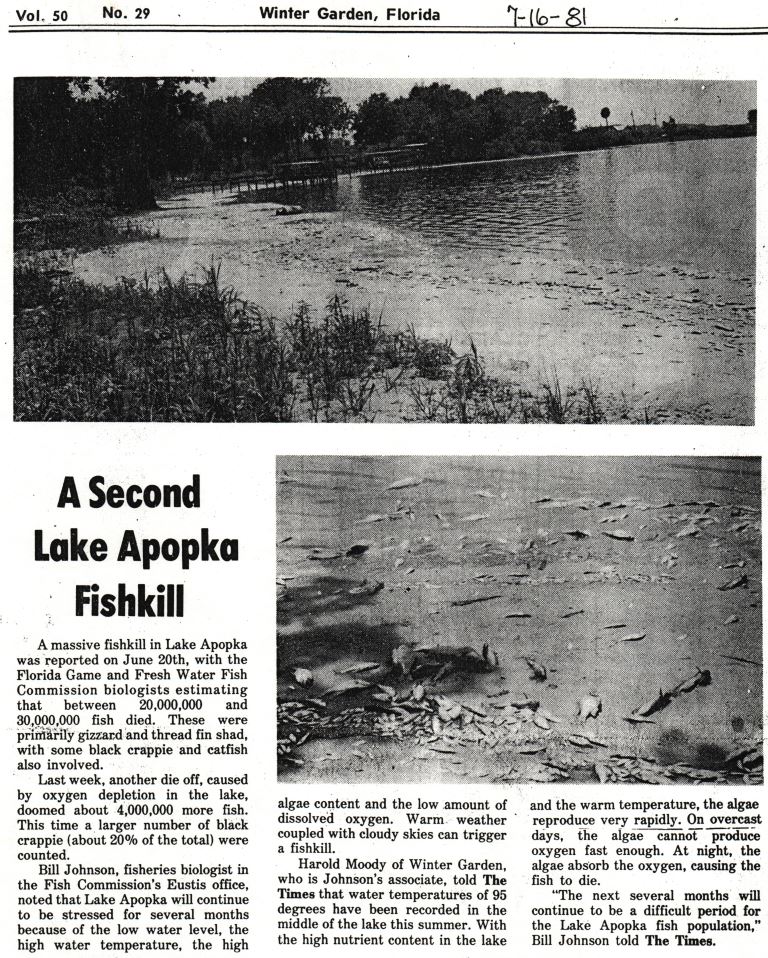
1980s-1990s: Research, Advocacy, and Restoration Beginnings
By the 1980s, Lake Apopka's degradation had spurred research and grassroots activism. The Surface Water Improvement and Management Act of 1987 designated Lake Apopka as a priority water body for restoration, building on the 1985 Lake Apopka Restoration Act.
In 1991, concerned citizens formed the Friends of Lake Apopka, pressuring officials to act. Their efforts led to the Lake Apopka Improvement and Management Act of 1996, which provided funding to buy out agricultural lands on the lake's north shore – the source of much nutrient pollution.

2000s-2010s: Intensive Restoration and Gradual Improvements
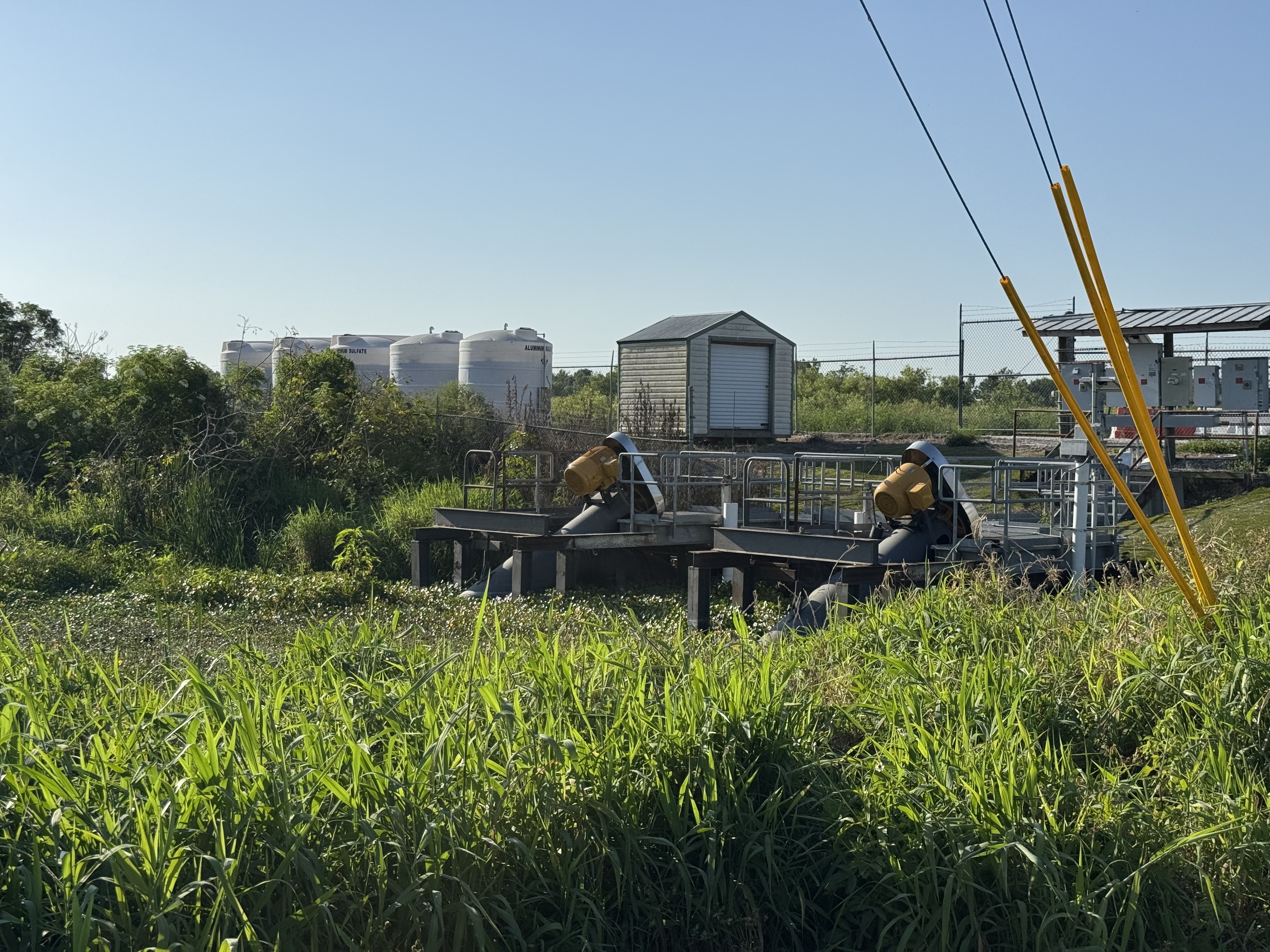
With external nutrient inputs largely cut off after 1998, efforts focused on removing legacy nutrients from the lake. A full-scale marsh flow-way, covering ~760 acres, went online in 2003, filtering enormous quantities of algae and suspended solids from the water.
The gizzard shad removal program continued, with over 13.7 million pounds of shad removed by 2007. Water quality data showed statistically significant declines in nutrients and algae levels over the years, while water transparency gradually improved.
2020-Present: Signs of Recovery and Future Outlook
As of the 2020s, Lake Apopka's water quality has reached its best levels in decades. Phosphorus concentrations are about 69% lower than in the late 1980s, and water transparency has approximately doubled compared to the early 1990s.
For the first time in over half a century, native aquatic plants are returning. In 2023, a project planted 40+ acres of eelgrass as starter colonies, with some areas projected to reach nearly 1,000 acres of coverage as plants propagate naturally. Despite these improvements, ongoing management remains essential to sustain the lake's recovery.